How is Breathizen supposed to work?
The seller describes three fronts: calming irritation, loosening mucus and strengthening "respiratory capacity." Read as pharmacology, the product has three active extracts plus a soothing base. Here is what each part could plausibly do, and where the evidence stops. The full route map lives on the How It Works page.
Mullein and the soothing-herb tradition
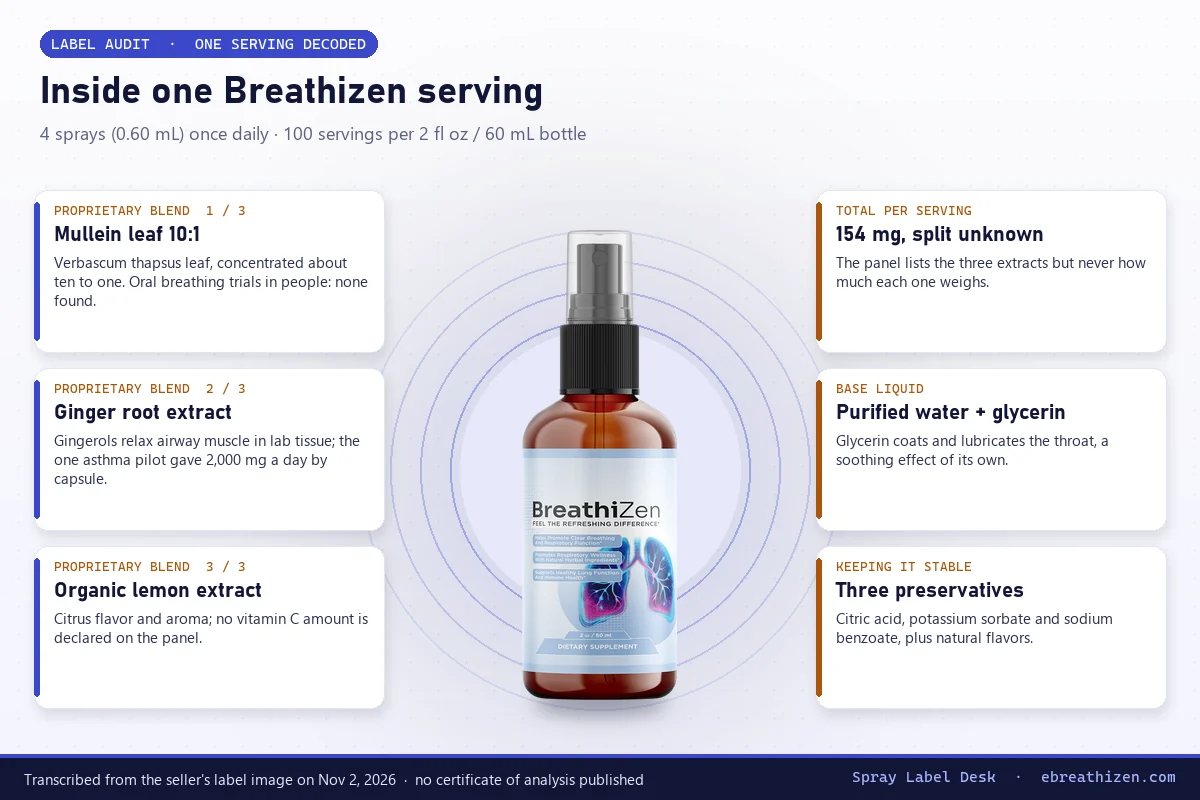
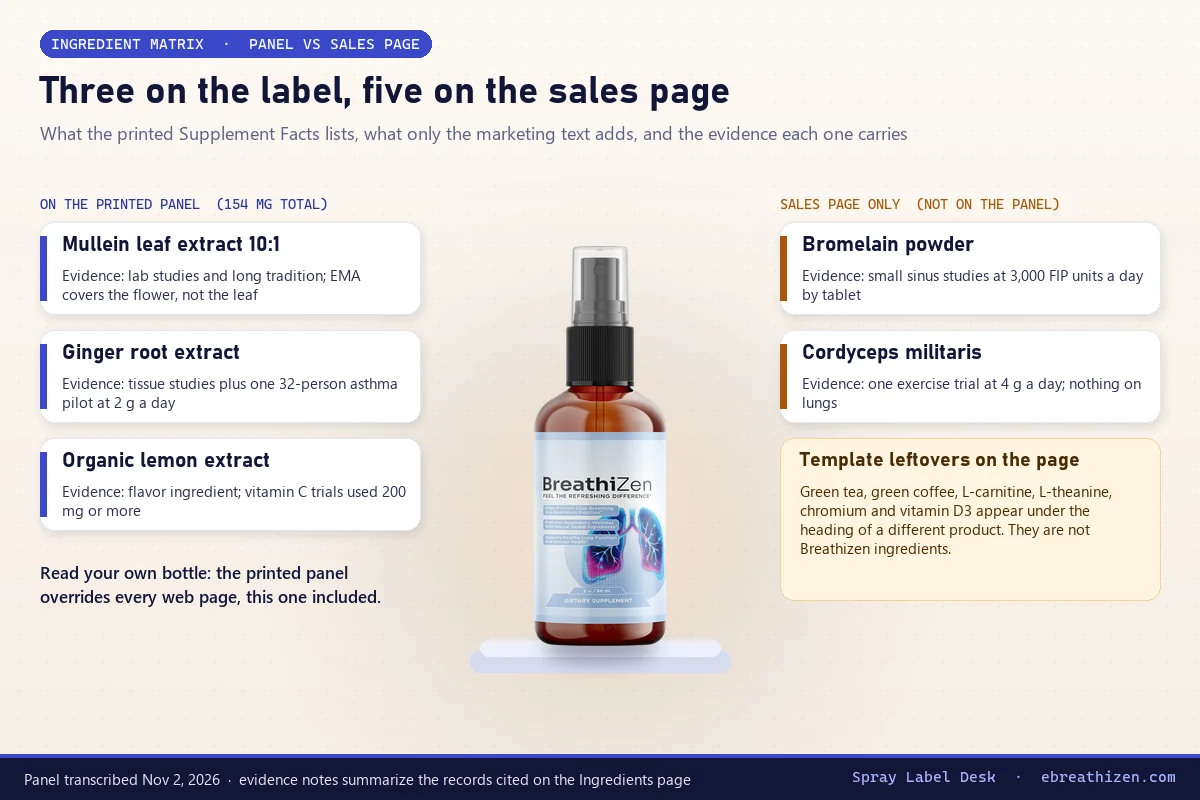
Mullein leaves contain mucilage, saponins, flavonoids and iridoid glycosides, the compounds behind its centuries-old use as a cough and chest herb[1][2]. In cell and bench studies, mullein extracts and the related compound verbascoside show anti-inflammatory and antimicrobial activity[4][5]. Those are dish results at controlled concentrations, not proof that a few milligrams swallowed each morning reach the lungs in a meaningful amount.
Ginger and airway smooth muscle
Ginger is the ingredient with the most interesting airway science. In isolated human airway tissue, ginger and its gingerols and shogaols relaxed precontracted smooth muscle by changing calcium handling[9]. In allergic mice, ginger extract dampened the Th2 inflammation behind asthma[11]. And in 2024 a small randomized trial in people with uncontrolled asthma found better daily symptom scores on ginger, without a change in exhaled nitric oxide[10]. The catch is the dose, which the next sections take apart.
Lemon, glycerin and the soothing you feel first
The first thing most people will notice is taste and texture. Glycerin is a demulcent: it lubricates and coats, which is why it sits in nearly every cough syrup and may account for much of their benefit[19]. A sweet, citrus-flavored liquid also triggers the same comfort pathway that makes "placebo" syrups surprisingly effective for cough[18]. That effect is real, but it is not specific to mullein or ginger.
The spray route: mouth, throat, stomach
A mouth spray is not an inhaler. Sprays land on the tongue and cheek lining, where a fraction of some molecules can cross into nearby veins; the rest is swallowed[20]. Botanical extracts are large, mixed and mostly water-soluble, so for Breathizen the realistic expectation is ordinary oral absorption, with a short soothing contact on the way down. Nothing in the spray is delivered into the bronchi.
Why three extracts instead of one
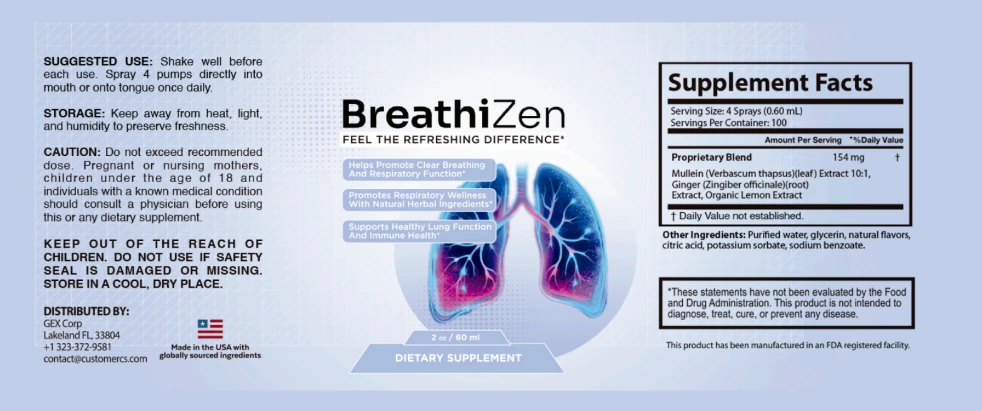
The logic of the blend is complementary roles: a traditional demulcent herb (mullein), a warming root with airway and anti-nausea research (ginger) and a flavor that makes the dose pleasant (lemon). The downside of any blend is dilution. Splitting 154 mg three ways guarantees each extract is present at well under the amounts used in published studies, and the label does not say which one dominates.